Drought + our 2026 Garden plans
“Hoping for the best, prepared for the worst, and unsurprised by anything in between” - Maya Angelou
In Denver, we’re always thinking about drought gardening; responsible water usage comes with the territory growing food here. We’re no strangers to water restrictions, and while our small garden doesn’t make much of an impact in a state that uses a huge amount of water agriculturally, we still feel compelled to be responsible stewards of a limited resource. It’s one of the many reasons we decided to turn the parking lot that was our back yard into a garden, rather than a grass lawn. Our climate is semi-arid, but this winter has been so unseasonably warm and dry that we are making some adjustments to the crops we’re planning on planting this year, as well as our overall strategy if nothing changes.
The changes we’re considering are:
Planting drought adapted, regionally adapted, and native varieties - striving to do this is a goal for us year over year, but we are going to give up some of our more water hungry crops that are better adapted to hot/humid climates. We’re abandoning our “fun” experiments like trying to grow winged beans, peanuts, and lentils in a region they don’t belong in. We’re pausing growing water hungry crops like melons and pumpkins, and instead focusing on things that are better suited to arid climates, like tepary beans, dent corn, and black beauty zucchini. Some companies we love that offer these kinds of seeds are Masa Seed Co, Pueblo Seed & Food Co, High Desert Seed + Gardens, and Native Seed Search.
Planting dwarf varieties - we’re switching from regular sweet corn to dwarf sweet corn, and we’re switching several of our vining squash seeds to bush and container varieties. While these still require some consistent water to get going, overall they will use less water over the season. The idea behind that is simple, smaller crops have less biomass and use less water. Dwarf varieties don’t mean smaller yields, and we have learned to prefer dwarf tomatoes over their unruly cousins. We love Renee’s seeds for container varieties, and Victory Seed Co for dwarf tomatoes. Catydid is our favorite dwarf tomato variety.
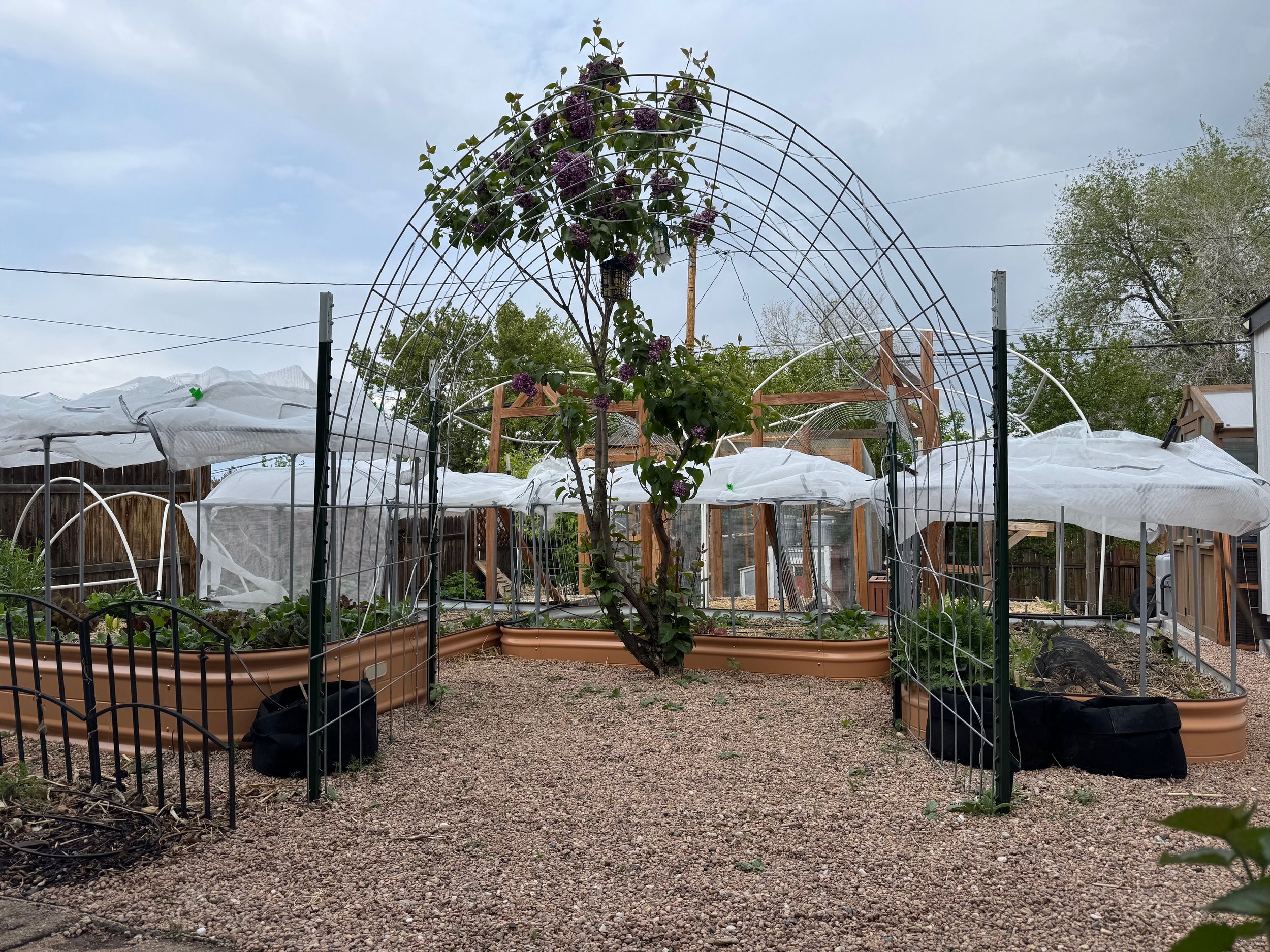
Maximizing our space in the garden - we are big fans of dense planting (and building the soil to support it), but this year, there will be even less open space in our garden. Every square foot will be filled. We want to make sure the water we’re using is maximized, and our soil is protected, evaporation is minimized, and the root zone stays cooler.
Minimizing our garden footprint - if nothing changes with our weather pattern, we won’t plant a front yard garden. Instead, we will plant a cover crop and let our soil rest for the season. Cover crops, also called living mulch, are meant to be planted then returned into the soil for enrichment. They help to restore depleted nutrients, protect the soil from erosion, suppress weeds, and can even help with pest prevention. Examples of cover crops are crimson clover, buckwheat, cereal rye, cowpeas, fava beans, winter wheat, peas, and oats. We have had some challenges with our soil out front, so it might be time to give things a break and let cover crops help fix the nitrogen out there for next year. You can purchase cover crop seeds nearly everywhere, Botanical Interests has a few blends that do well in CO.
In terms of drought gardening - there are some things that aren’t large-scale projects that we do in the garden every year that we would strongly recommend to folks who are planning a garden. These are things we consider best practices and they align with our city codes (though we wish we could harvest endless rainwater).
Mulch - we are mulch evangelists, nothing will protect your soil better than mulch does. Aside from preventing solarization, mulch is key to keeping the moisture in your soil. Even though we have had an incredibly dry winter, we can push our mulch back and there’s still moisture in the soil underneath. Mulch comes in all kinds of mediums. We started with wood chips (hello Chip Drop), and have since transitioned to alfalfa free straw which has a little better soil benefit in the garden from what we’ve read (but wood chips are better than no mulch by far). We supplement our straw with organic cedar bedding, which is cheap and readily available at feed stores. Shredded leaves or cardboard boxes also work great. Whatever you choose to use, you need to cover your soil with an inch or two of mulch to keep the moisture in your soil.
Drip irrigation - one of the biggest culprits of water waste in CO gardens is using sprinklers and spray hoses to water. The best way to conserve water is to water at or under the soil level, which prevents evaporation before the water hits the soil surface. We use drip irrigation (we DIY’ed ours and got all the supplies from Drip Depot), but if you aren’t able to spend the time or money, a cheaper option is to purchase soaker hoses. The added benefit of using drip irrigation is automation - we don’t have to think about a watering schedule when we have everything programmed into a timer. We also have a rain sensor that shuts off the whole system if there is enough moisture, which makes it easy to only use the water we need.
Ollas - ollas are terra cotta containers that are buried at the soil level, and filled with water. The containers hold water inside and roots draw from that water over time. Ollas have been used in irrigation systems throughout the world for about 4,000 years. You can make your own (check YouTube for DIY tutorials), or you can purchase them from companies like Oya or local potters. We purchased ours in Taos, and use them out in our native pollinator garden where we have no other irrigation. We likely will purchase more ollas this year to supplement things in our vegetable garden during any potential water restrictions.
Shade cloth - our yard has no shade whatsoever; adding some shade can help keep the moisture in the soil and keep plants from becoming thirsty when things are dry in the hottest part of the day. Burlap works great as shade cloth, as does window screen you can purchase at the hardware store. We’ve used everything from insect netting to frost cloth to add a filter between the sun and our plants with success. In Colorado, you need hail protection, so our shade cloth does double duty by protecting the garden from our harsh altitude sunlight and hail.
Timing - we avoid watering during the hottest parts of the day to minimize evaporation and maximize our water use. Watering in the early morning or late evening is a best practice.
Deep watering - maximizing water days by soaking the soil to a depth of 6 to 8 inches once every 7 to 10 days can enhance plant drought resilience by forcing plants to form deeper root systems that access deeper soil moisture levels.
Don’t toss it - we do some things folks might consider extreme, like saving our blanching/canning/pasta water for the garden, showering less in the summer, and catching rainwater in a drum in our chicken coop. Ultimately, our goal is to figure out how a grey water system works in our space (now that it’s finally legal in Denver!), but until then, these small things we can do make a little difference as things get planted and settled into the soil for the summer.
We’re still holding out hope for the March 2003 blizzard, or an incredibly rainy spring to help offset the lack of moisture we’ve had this winter, but if even if that happens, it’s not going to change our overall approach much. The reality is, we will need to continue using drought gardening methods for the foreseeable future. Fortunately, growing food is a much better use of water resources than grass lawns, and it can be done responsibly, even in a time of drought.